 Even when I’m totally engrossed in a book I’m still analyzing its structure. What did the author do to make it work…or, in some cases, not work? I’ve spent the last week reading books in my search for titles that are similar to my novel, “Mary Bishop”. If you read last week’s post, you know I needed to include a list with my agent queries. While reading, I was reminded over and over again how women gain strength through their friendships with other women.
Women’s friendships are emotional, supportive. Women want someone who will listen, maybe a hug. Women want someone who understands. Women are there for each other when they give birth, when they are ill, when there is a death. At a time when men had access to anything they wanted by right of birth, it was women who gave each other worth. While the laws on women’s rights have changed, the dynamics of women’s friendships have not.
In my novel, Mary Bishop is a strong woman. She finds her strength deep within herself when her husband, Earl, is unable. But when he dies and she is at her lowest, it is her friends Sarah and Frances who come to her rescue, lifting her back out of the darkness. Only they truly understand what Mary’s feeling, and only they can tell her when she’s being foolish by letting someone else undermine the truth Mary knows in her heart.
The books I chose to include with my submission were “True Sisters” by Sandra Dallas, “Caroline: Little House, Revisited” by Sarah Miller, and “At the Water’s Edge” by Sara Gruen. I highly recommend all three.
In “True Sisters”, a group of Mormon converts emigrate from England to America, a decision made by their men. It’s a long trip by boat across the Atlantic, then train to Iowa City, and from there they walked, pushing handcarts loaded with their barest worldly possessions, to Salt Lake City. Many died along the way. The men summed up each loss as the will of God. It was the friendship of other women that kept the women strong each time they buried a loved one. It was other women who recognized the pain each went through when another purge of their belongings meant another treasured possession left behind. It was women who attended births, illness, and injury along the way. The handcart parties were real and this book is a fictionalized version of the final party to make it across the mountains to Salt Lake City.
“Caroline” will be recognized by anyone who read “Little House on the Prairie”, except that this time the story is told from Ma’s point of view, rather than Laura’s, and is less romanticized. Caroline is pregnant with Carrie, Mary is five, and Laura is three, when Charles announces that he has sold their house in the Big Woods and they are going to Indian Territory in Kansas. While Caroline outwardly supports her husband’s decision, she knows what dangers lay ahead on such a trip, especially in late winter: the rivers they will have to cross, the wild animals, the Indians. She agonizes over the loss of her female support system with another baby on the way. She wonders who will attend her birth. How will she manage without her sisters? She knows she may never see them again. It isn’t until she meets Mrs. Scott from a neighboring claim that she regains that support. It’s Mrs. Scott who attends her birth. It’s Mrs. Scott who shows up at their door and stays as long as necessary when all but the baby fall deathly ill. Those familiar with the Ingalls’ story know there will be many uprootings in her lifetime as her husband searches for his dream, and each one will be a test of Caroline’s strength; as it was for so many women during the westward expansion.
“At the Water’s Edge” takes place at the tail end of WWII. A young socialite from Philadelphia who lives a frivolous, indulgent, and often reckless lifestyle finds herself on a freighter to Scotland with her arrogant unloving husband and his friend as the two men go on their obsessive hunt for the Loch Ness monster. Practically abandoned at a small inn, Maddie is suddenly immersed penniless in the unknown world of rations, blackouts, and air raids. Over time she befriends the two women who work at the inn and through them comes to realize she is strong enough to find her own way and leave her abusive husband.
“Mary Bishop” is historical women’s fiction and historically women have always found strength in friendship with each other. Mary’s strength grows with the support of her friends, as did the handcart women’s, Caroline Ingalls’, and Maddie Hyde’s.
 Some people believe all writers do is write. After we’re done with one book we launch right into another. I wish!! There was a time when a writer could count on their publisher doing all the PR work. Publishing houses had whole departments for promoting their lists. They scheduled book tours/signings, placed your books in all the right stores, and ran ads in the papers and magazines with the highest reader numbers in your market. Not anymore.
 Back in May, I had the opportunity to pitch my novel, “Mary Bishop”, to two agents at WisRWA’s annual conference in Green Bay. One requested the first five chapters and a short synopsis, but suggested the manuscript be about 10,000 words longer. The second requested the first three chapters and a short synopsis. She also told me something I’d already figured out for myself. The reason I hadn’t sold it yet, despite all the positive comments from editors, was I had been submitting to the wrong market. It’s not historical romance; it’s historical women’s fiction with romantic elements. Yes, there’s a difference. The characters and plot lines are more complicated and need a longer format.
 Today is Friday the 13th, and it’s October, which makes it all the spookier for those who believe in omens, superstition, and such things. Halloween winds down the month of October. We spend weeks watching horror movie marathons, visiting corn mazes and haunted houses while picking apples and pumpkins. Then we end the month by dressing our children in costumes and binging on an orgy of chocolate left over after all the little ghouls and goblins have gone home.
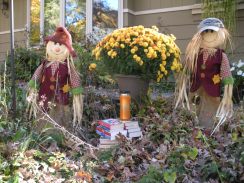 I’ve written before about how I love everything fall, but that’s not entirely true. I love the colors, the scents, the flavors of fall. I love the cooler temperatures, fuzzy sweaters, and hot chocolate mixed with a little peppermint schnapps. And maybe most of all, I love just about anything pumpkin spice or cranberry. We’re only a month away from lefse-making day with my sister-in-law. Playing golf in the fall is special, too, when it’s not so hot and the leaves are all changing. We have a beautiful golf course here in St Croix Falls.
 But there is one thing I do not love about fall. Mice.
 Did you know that mice have soft bones and can easily squeeze through a hole the size of a dime? As soon as my husband finds one hole and blocks it, they find another…or create another. As I said, they like to chew on things.
 I was told to always carry my business cards with me because you just never know. Last December I switched purses to go to a Christmas party. The new bag was much smaller and as I held the card case in my hand I thought to myself, “No one’s going to ask for a card at a Christmas party. It’s not that kind of party.” So I left it in my every day purse and, wouldn’t you know it, someone asked for my card. She chastised me, and rightly so, for not having some cards with me.
 I am on vacation this week. A much needed get-away to celebrate my retirement with my sister on the west coast. So I will simply leave you with one of my poems. This was written years ago from a childhood memory. We lived on a hill and after a summer rain my two oldest brothers and I would rush outside to race our “ships” down the flooded gutter.
 A couple weeks ago I wrote about my author friend Tina Susedik. This week I want to tell you about another, Beth James. Beth self-publishes and currently has three books available on Amazon. A fourth will be out soon…I hope.
 We’ve all been disappointed after spending money on an Amazon deal for a self-published book that was not very good: confusing plot, horrendous grammar and punctuation, and all the typos. (Drives me crazy! I even marked up one with my red pen and then threw it away when I was finished. And it was a really good story.) As I said earlier, if smart, a self-published writer will pay a professional editor to catch what they’ve missed. Fortunately, not all self-published authors are that untalented or sloppy. Beth is one of the outstanding ones.
 Then why not go the traditional route? There are many reasons. Even good novels can’t always find a publisher. The publishing business is tough. They get inundated with submissions, many not so good, but many are really good and they just can’t take them all. It comes down to cost vs income. They need to pay their bills, too. Some authors prefer to keep complete control over their work. They don’t want to have to make edits they don’t like. They don’t want to accept a cover design that doesn’t represent their view of the story. As for profits, publishers and agents do get a percentage of the sales and not all authors are willing to pay that when they believe they can do the job just as well themselves and keep all the profits. It’s all about control.
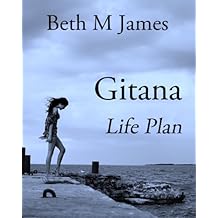
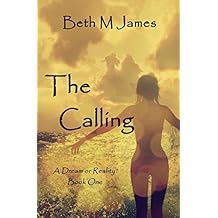
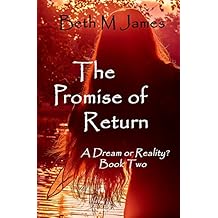 I recently finished reading Beth’s “The Promise of Return”, book 2 of her three book series “A Dream or Reality”, and I can’t wait for book 3 to find out what happens. After book 3 I may have to back track and buy her debut stand-alone novel, “Gitana – Life Plan”. I hear that’s another great read.
 Jane Yunker, Author